
Nicotine Pouches in Brazil: Shipping from Sweden, Customs and Import Regulations
Interested in the nicotine pouch market in Brazil? Learn about shipping from Sweden, Brazilian customs duties, and the latest ANVISA regulations. Discover what consumers should know about import restrictions and potential future changes affecting international retailers such as Smokekicker.
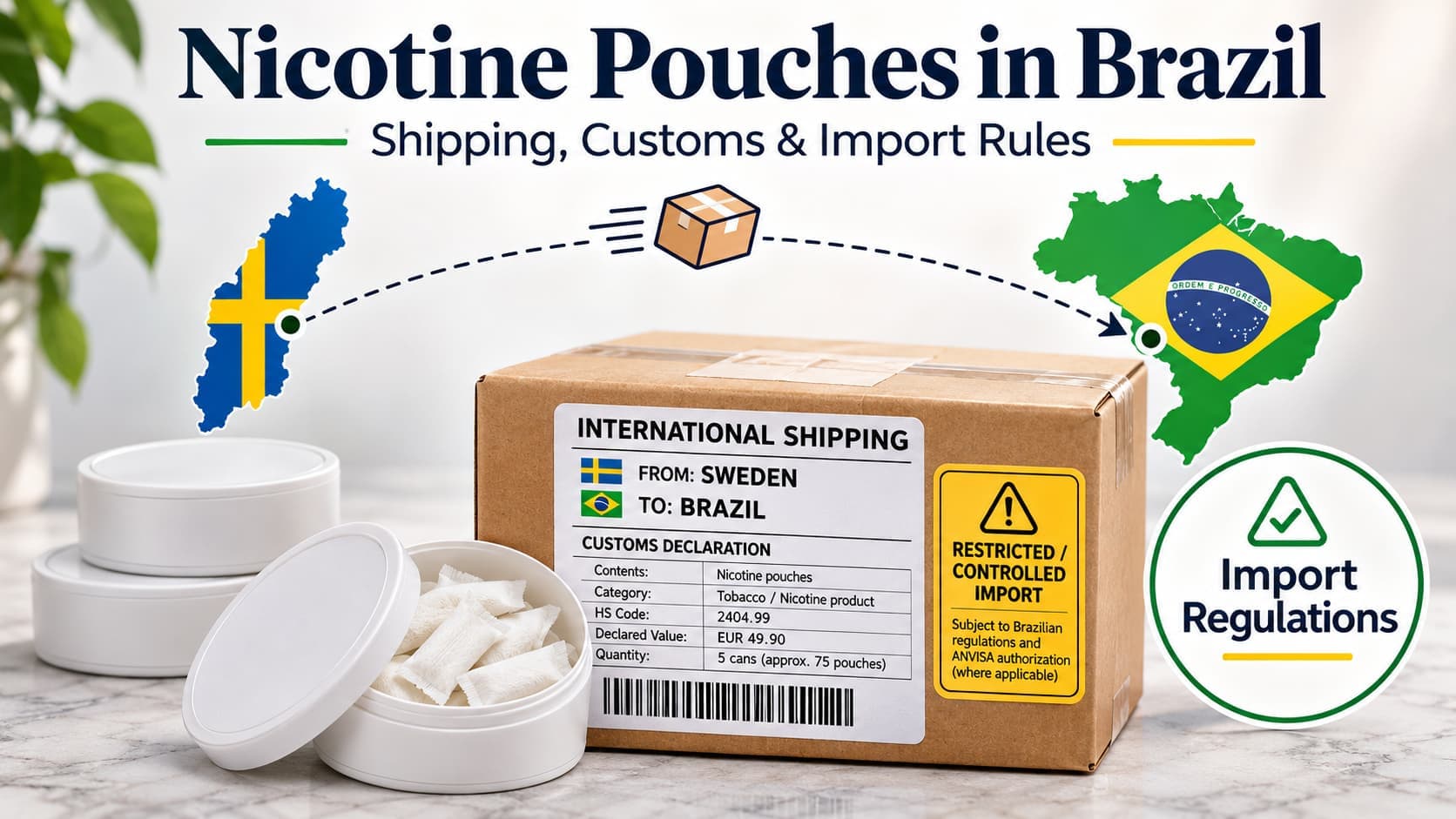
Nicotine Pouches in Brazil: Shipping from Sweden, Customs and Import Regulations
The international nicotine pouch market has expanded significantly in recent years, with Sweden playing a leading role in the development and distribution of tobacco-free nicotine products.
As nicotine pouches become more widely recognized around the world, consumers in Brazil have also shown interest in international brands and online retailers.
However, buying nicotine pouches from overseas involves several important considerations. Brazilian import regulations, customs duties, product restrictions, and international shipping arrangements all determine whether a shipment can legally enter the country.
For Brazilian consumers interested in nicotine pouches, understanding Brazil's regulatory framework is particularly important.
This guide explains the current legal status of nicotine pouches in Brazil, how international shipping works, what customs charges normally apply, and how potential regulatory changes could affect the market.
The Nicotine Pouch Market in Brazil
Nicotine pouches, sometimes called sachês de nicotina or bolsas de nicotina in Portuguese, are small oral pouches containing nicotine, fibers, flavorings, and other ingredients.
Unlike traditional Swedish snus, tobacco-free nicotine pouches do not contain tobacco leaf. They are placed between the lip and gum, allowing nicotine to be absorbed through the oral lining.
Although nicotine pouches have established markets in Sweden, the United States, and several other countries, Brazil maintains a restrictive regulatory approach.
The Brazilian Health Regulatory Agency, known as ANVISA (Agência Nacional de Vigilância Sanitária), oversees products containing nicotine and determines which categories can legally be marketed.
As of November 2026, nicotine pouches are not authorized for general commercial sale or importation in Brazil.
This creates an important distinction between the availability of nicotine pouches on international websites and their eligibility for delivery to Brazilian consumers.
Are Nicotine Pouches Legal in Brazil?
ANVISA has historically maintained strict controls on emerging tobacco and nicotine products.
Nicotine pouches currently lack an established authorization pathway permitting their general commercial sale in Brazil, and Brazilian authorities have treated unauthorized nicotine pouch imports and distribution as prohibited.
In January 2025, health authorities in Mato Grosso do Sul reported the seizure of thousands of unauthorized nicotine products, including products described as snus.
These enforcement actions demonstrate that the availability of nicotine products on international websites does not necessarily establish their legal status in Brazil.
Could the Rules Change?
There have been developments in the Brazilian regulatory discussion.
In May 2026, ANVISA opened a public information-gathering process concerning emerging nicotine-based products.
The agency's 2026–2027 regulatory agenda includes consideration of products such as nicotine pouches.
This process may help determine how such products should be regulated in the future.
However, a regulatory review is not equivalent to product authorization. Until applicable rules change, consumers and international retailers must respect the existing restrictions.
Shipping Nicotine Pouches from Sweden to Brazil
Sweden is an important international center for nicotine pouch manufacturing and distribution.
Swedish online retailers, including Smokekicker, operate within a market that features a broad variety of nicotine pouch products.
For international e-commerce generally, shipping from Sweden to Brazil involves several stages, including export documentation, international transportation, Brazilian customs assessment, and final delivery.
However, the availability of a shipping route does not mean that all products are accepted for transportation or importation.
How Does International Shipping to Brazil Work?
For goods that can legally be imported, a typical international postal shipment follows this process:
1. Order processing
The retailer prepares the goods and verifies applicable shipping restrictions and destination-country requirements.
2. Customs documentation
International shipments require information about the goods, their value, country of origin, and customs classification.
3. Transportation from Sweden
The parcel is transferred to an international shipping provider for transportation toward Brazil.
4. Brazilian customs processing
On arrival, the shipment may be reviewed by Receita Federal, Brazil's federal tax and customs authority, and other responsible regulators.
5. Taxes and customs clearance
Eligible imported goods are assessed for applicable customs duties and taxes. Goods subject to import restrictions may require additional authorization or may be refused entry.
6. Final delivery
Once a shipment has successfully cleared customs and all applicable regulatory requirements, it can continue toward the recipient.
For nicotine pouches, the existing restrictions are a significant obstacle to this process.
Understanding Brazilian Import Duties and Taxes
Brazil has a relatively complex import taxation system.
For permitted international e-commerce purchases, Brazilian consumers may encounter two principal taxes:
-
Imposto de Importação (II): Federal import duty.
-
ICMS: A state-level tax applied to goods and certain services.
Brazil also operates the Programa Remessa Conforme, a program designed to improve tax compliance and transparency for international online purchases.
Import Duties Under Remessa Conforme
Under the rules effective from May 12, 2026, the general simplified taxation framework includes the following rates for eligible online purchases by individuals:
|
Type of international purchase |
Federal import duty |
State ICMS |
|---|---|---|
|
Certified Remessa Conforme retailer, up to US$50 |
0% |
17–20% |
|
Certified retailer, over US$50 up to US$3,000 |
60%, minus US$30 |
17–20% |
|
Retailer outside Remessa Conforme |
60% |
17–20% |
The applicable customs value generally includes the cost of goods, shipping, and insurance.
ICMS is calculated using a tax-inclusive formula, meaning the total tax burden can be higher than the simple addition of the listed percentages.
These rates describe the general simplified import framework for eligible goods. They do not mean that restricted products, including unauthorized nicotine pouches, can be legally imported by paying the required taxes.
Why the Retailer's Customs Arrangement Matters
For consumers purchasing permitted products internationally, it is important to establish whether import duties are collected during checkout or after the shipment arrives.
Purchases through certified Remessa Conforme platforms generally include applicable import taxes at checkout.
For purchases outside the program, taxes are normally assessed during Brazilian customs processing.
Consumers should also verify whether their retailer offers a duties-included delivery service and whether that service applies to the specific goods being ordered.
Can Brazilian Consumers Order Nicotine Pouches for Personal Use?
A common question is whether importing a small quantity of nicotine pouches for personal consumption is treated differently from commercial imports.
Personal use should not be assumed to create an exemption from Brazil's restrictions on unauthorized nicotine products.
A small parcel may still be subject to inspection, detention, or refusal by Brazilian authorities.
Similarly, customs declarations and duty payments do not replace required health regulatory approvals.
Consumers should obtain confirmation from the relevant Brazilian authorities before attempting to import nicotine pouches.
Swedish Nicotine Pouches and International Online Retailers
Sweden has developed a substantial nicotine pouch industry, with manufacturers producing different pouch sizes, nicotine strengths, moisture levels, and flavor profiles.
Retailers such as Smokekicker provide information about products available within the international nicotine pouch market.
For Brazilian consumers researching this category, Swedish retailers can offer insight into market developments, product characteristics, and the differences between national regulatory systems.
Nevertheless, international product availability and eligibility for importation are separate matters.
Smokekicker's international product catalog should not be interpreted as confirmation that every product can be purchased or delivered legally in Brazil.
What Happens If a Shipment Is Refused by Brazilian Customs?
Brazilian customs authorities may hold imported goods for inspection or request additional documentation.
If a product cannot legally be imported, the shipment may be refused entry, returned where permitted, seized, or otherwise handled according to applicable enforcement procedures.
Potential consequences can include financial losses, return costs, administrative procedures, or penalties, depending on the circumstances.
Import duties already paid do not necessarily protect a shipment from refusal, and reimbursement is not guaranteed.
This is why verifying product eligibility before arranging international transportation is essential.
The Future of Nicotine Pouches in Brazil
Brazil is an important consumer market, and the regulatory treatment of emerging nicotine products continues to attract attention from policymakers, public health organizations, and industry participants.
ANVISA's 2026 regulatory work represents a notable development for the nicotine pouch category.
Possible future regulatory approaches could include product authorization requirements, restrictions on nicotine content, mandatory labeling, age verification, or controls on advertising and distribution.
However, these are potential regulatory considerations rather than confirmed future rules.
Any changes would depend on ANVISA's formal decisions and the publication of applicable regulations.
For international retailers, developments in Brazil could eventually affect the legal conditions for product distribution and cross-border e-commerce.
Until such changes occur, current restrictions remain the relevant starting point.
Final Thoughts
The international nicotine pouch industry continues to develop, with Sweden remaining an important source of product manufacturing and innovation.
For Brazilian consumers interested in international online markets, understanding shipping procedures, customs duties, and import regulations is essential.
PostNord and other logistics providers offer international transportation services and, on certain routes, duties-included shipping arrangements that can simplify customs payments for eligible goods.
However, Brazil's current restrictions on nicotine pouches mean that the availability of international shipping services does not establish permission to import these products.
Retailers such as Smokekicker provide a perspective on the wider European nicotine pouch market, while Brazilian consumers should follow ANVISA's regulatory developments for any changes in domestic availability.
As Brazil continues evaluating emerging nicotine products, the distinction between international market access, customs procedures, and legal product authorization will remain particularly important.
Important information: Nicotine is addictive and nicotine products are not risk-free. This article is intended for general information only and does not constitute legal advice. Import and product regulations may change.
Last updated: November 2026.